
government secure data transfer data featured image

Defence and deployable edge: controlling outbound data flows from sensitive environments

defence deployable edge outbound data: practical guidance for secure one-way data flow architectures.

Summary: Edge deployments in defence contexts must assume contested logistics and strict export rules for information. This article focuses on architectural patterns for assured outbound reporting without enabling inbound control surfaces.

Threat model framing

When devices capture sensor or operational truth at the edge, the priority is often integrity and assurance of egress, not convenience of bidirectional maintenance from untrusted networks.

Where hardware-enforced diodes fit

Pair procedural controls (tamper-evident procedures, physical security) with network segments where reverse paths are physically absent for categories of traffic that must never return commands or exploits.

Documentation

Review the ConnexONE comparison and technical guide:

Data diode vs firewall (PDF)
Guide to Data Diodes (PDF)

Disclaimer: Defence accreditation paths vary by nation and programme—this article is architectural commentary, not a compliance determination.

Read More

CIS Controls Compliance- Vertical Solutions

VERTICAL SOLUTIONS
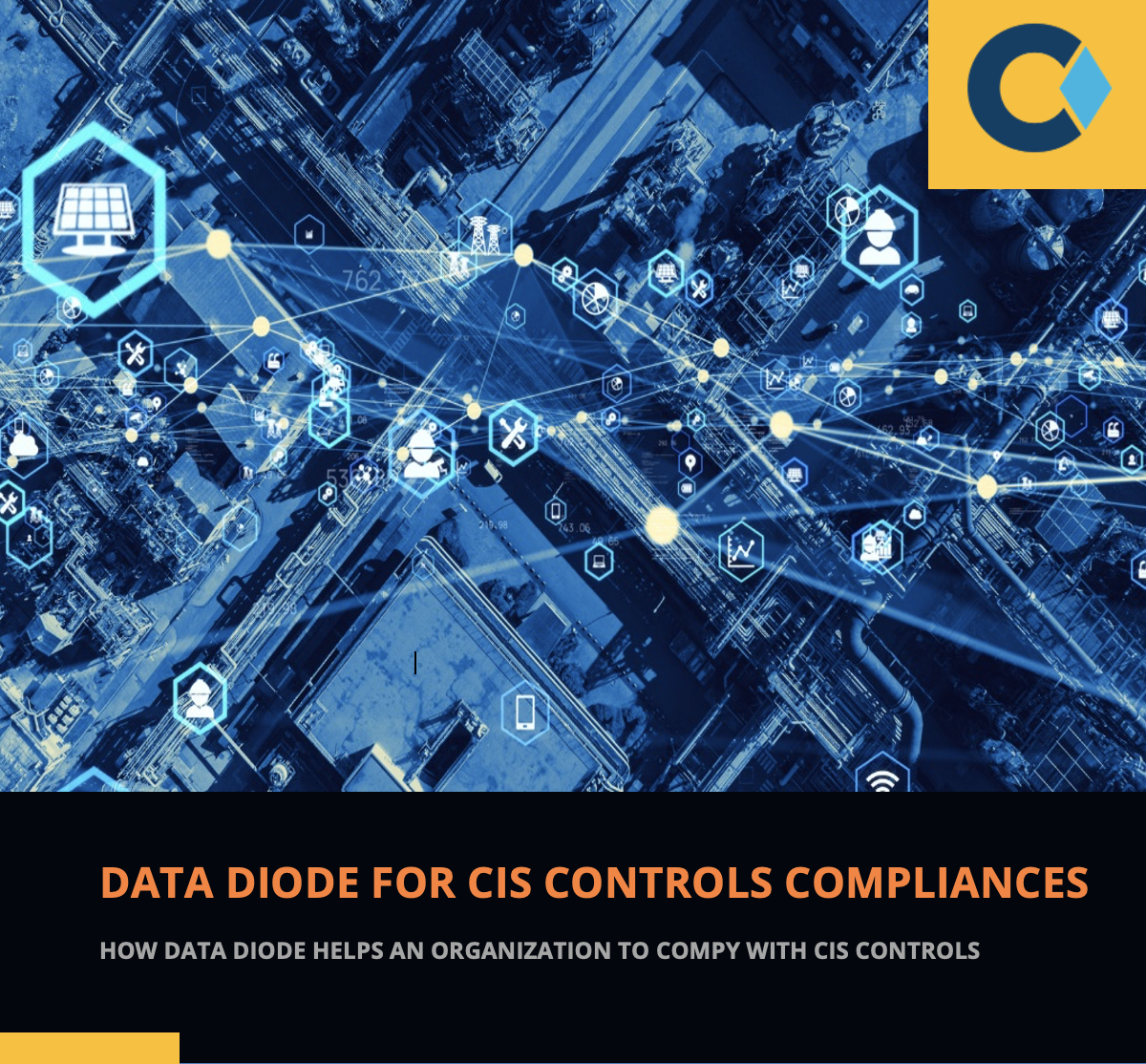
CIS CONTROLS COMPLIANCE

Center for Internet Security developed the CIS Controls v8.1 for ICS—a specialized framework designed to help cybersecurity posture using practical, prioritized defensive measures

The CIS Controls for Industrial Control Systems (ICS) is a globally recognized cybersecurity framework developed by the Center for Internet Security. It provides a prioritized set of defensive actions specifically tailored for operational technology (OT) environments, guiding asset owners in securing critical infrastructure like manufacturing plants, power grids, water treatment facilities, and more. The v8.1 ICS edition maps these actions to the unique risks and constraints of ICS, including real-time system requirements, legacy components, and safety-critical operations.

ICS environments face increasingly frequent and sophisticated cyber threats—from ransomware that halts production to state-sponsored attacks targeting energy systems. The CIS Controls v8.1 provides a practical, tested roadmap for resilience, covering everything from asset inventory and configuration management to secure data flow and audit logging.

ConnexOne, our high-assurance, hardware-enforced unidirectional gateway, plays a pivotal role in achieving the goals laid out in the CIS Controls v8.1 ICS guide. While many safeguards rely on policies or software enforcement, ConnexOne offers physically enforced data integrity by ensuring that information flows only one way—from ICS to enterprise, never back. This unidirectional flow is vital in scenarios where confidentiality, system integrity, and availability are non-negotiable.

Read More

File Transfer – Protocol Guide

PROTOCOL GUIDE
File Transfer

Wide protocol support for file transfer from simple SMB to Amazon S3

File transfer between strictly different security zones is crucial for maintaining data integrity and security. It ensures that sensitive information is securely transmitted without exposing critical systems to potential threats. One-way communication, facilitated by data diodes, significantly enhances security by allowing data to flow only from a secure zone to a less secure zone. This unidirectional flow prevents any return path for potential cyber-attacks, ensuring that sensitive networks remain isolated and protected. By using one-way communication, organizations can safely transfer necessary data while mitigating the risk of unauthorized access and maintaining robust cybersecurity protocols.

ConnexOne DNA of one-way protocol transfer comes from its ancestors, deployed only where file transfer was enough. It creates a delivery environment of secure, fast and reliable, but also comply with business flows by adding more security precautions such as data masking, metadata cleaning and external tool integrations.

ConnexOne also allows hierarchical permissions to be applied for any file transfer, matching with corporate security policies, that may be forced by law, or defense industry regulations

Read More